Seven Facts on Cervical Cancer Elimination by 2035 in Australia
“Australia is on track to become the first country to eliminate cervical cancer by 2035”
- announced the Australian Federal Government in November 2025 (Read the media release here).
This implies that cervical cancer will soon be gone and women will no longer die from this disease in our country.
This message has caused significant confusion. For years I have stated that cervical cancer elimination is a matter of decades and - even in Australia - true elimination is unlikely before the 2080s.
For women diagnosed with cervical cancer and for families affected by it, context matters. Here it is.
Seven facts:
1. Australia has had an organised cervical screening program since 1991 and transitioned to HPV based screening in 2016.
2. HPV vaccination commenced in 2007 with one of the highest global coverage rates (83.4% of female adolescents in 2024, HPV immunisation data accessible here).
3. Incidence is among the lowest worldwide: 6.6/100,000 in 2020 and 6.3/100,000 in 2021 with improving survival (incidence data accessible here).
4. Indigenous women have more than double the incidence and four times the mortality. Vaccination coverage has declined.
5. Self-collection for screening became available in 2022.
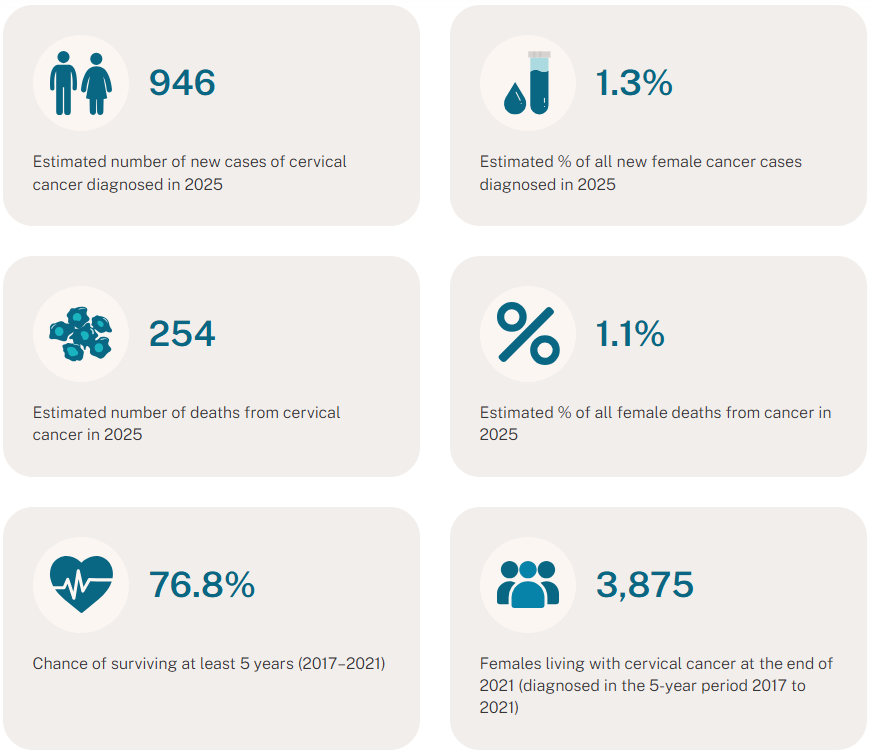
6. Around 1,000 Australian women will be newly diagnosed in 2026.
7. “Elimination” means <4/100,000 women per year nationally. “Eradication” is worldwide.
Elimination does NOT mean cervical cancer is gone.
Australia may reach the elimination threshold and this will depend on screening participation, vaccination uptake and sustained government support.
Australian population growth to 31.5 million by 2035 means that even when “eliminated”, around 630 women will still be diagnosed each year.
The incidence may be the lowest in the world. But hundreds of women will continue to face this disease.
What this means:
* Cervical cancer will not disappear but will remain a serious national health problem over decades.
* Consumers today and in the future need sustained prevention, smarter treatment and more equitable care.
* Families must understand that this disease is not over. Too many women are still being diagnosed and dying every week.
* Clinicians and researchers must work together to develop ways to reduce treatment burden and improve outcomes across Australia.